

What Is the Best Rigid Box Packaging in 2026?
Choosing the best rigid box packaging in 2026 depends on what the box must protect, how it will be used, and what customers notice when they open it. A heavy glass jar needs different support from a slim electronics accessory. A perfume gift box may prioritize a precise fit, smooth wrapping paper, and a satisfying lid. Small details matter.
There is no universal winner. Not even close. This guide compares common rigid box styles, including lift-off-lid, magnetic-closure, shoulder-neck, and drawer designs. It also considers board thickness, inserts, surface finishes, print quality, and practical costs. These choices affect more than appearance. They can influence product movement in transit, storage space, assembly time, and the unboxing experience.
Sustainability deserves careful attention, too. A premium-looking box is not automatically a responsible one. Material claims, coatings, inserts, and local recycling options should be checked rather than assumed. Some design choices sound impressive but add weight or complexity without solving a real packaging problem. That is worth questioning.
The sections ahead offer a practical way to compare options for retail products, corporate gifts, and premium goods. They explain which features may suit each use case, what to ask a packaging supplier, and where trade-offs often appear. The aim is not to crown one design for every brand. It is to help you choose a box that protects the product, fits the budget, and feels considered in the customer’s hands.
What Rigid Box Packaging Is and How It Is Constructed
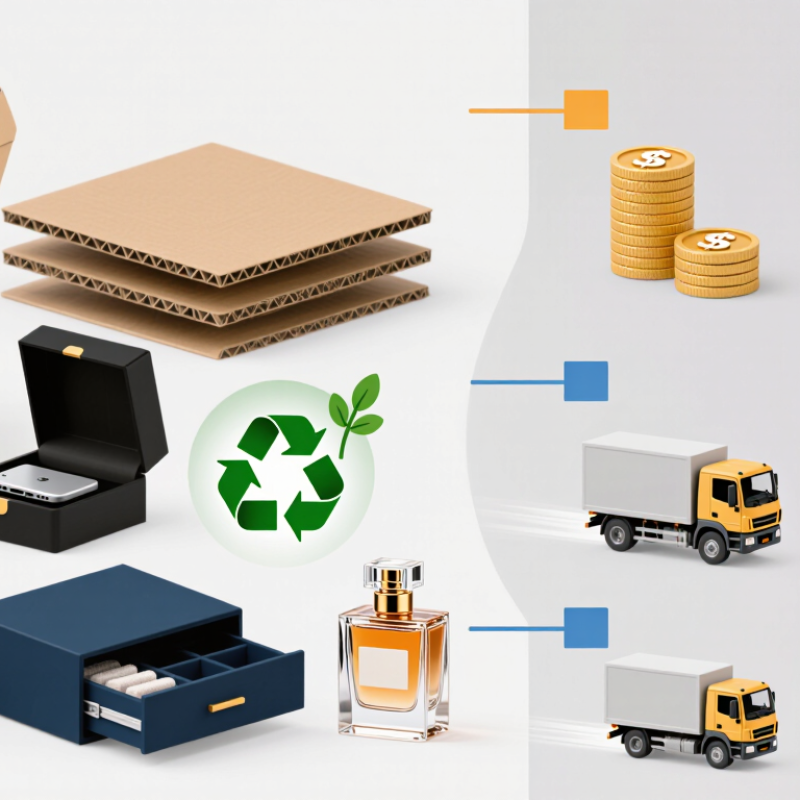
Rigid box packaging is a non-collapsible paperboard case, usually made from dense greyboard and wrapped with printed paper. Grand View Research’s 2024 Rigid Boxes Market report estimates the sector at about USD 15.5 billion in 2023, with continued growth expected through 2030. That demand reflects more than appearance. A rigid box protects shape, controls presentation, and supports repeated handling.
Construction starts with board selection. Panels are cut, scored, and joined before the outer wrap is applied. The wrap may use coated paper, uncoated stock, fabric, or recycled content. A manufacturer must control board thickness, grain direction, adhesive spread, and corner pressure. Small errors show quickly. A lid may scrape, warp, or sit unevenly. Inserts can use paperboard, molded fiber, or foam alternatives, depending on product sensitivity and disposal goals. Smithers’ The Future of Global Packaging to 2028 report identifies paper and board as major packaging materials, with the overall packaging market forecast to grow by roughly 3% annually.
Experience matters here. Quality teams usually inspect dimensions, surface rubbing, compression strength, and drop performance. A box can look premium but fail during transport. This is often overlooked. Better results come from testing the assembled box, not only its raw materials. Sustainability claims also need caution, because coatings, magnets, mixed materials, and difficult-to-remove inserts can reduce recyclability. In practice, the best construction is not always the most decorated one.
| Box Style | How It Is Constructed | Typical Board and Materials | Key Advantages | Considerations | Common Applications | Best Fit When… |
|---|---|---|---|---|---|---|
| Two-Piece Lid-and-Base | A separate lid fits over a tray-shaped base. Both parts are generally made by covering cut, rigid paperboard with printed or decorative paper. | Rigid paperboard, often about 1.5–3 mm thick; paper wrap and, when needed, an insert. | Simple, sturdy construction; offers broad surface areas for printing and finishing. | The lid and base may take up more storage and shipping space than a collapsible design. | Gift sets, apparel accessories, confectionery, and premium consumer goods. | A classic presentation and a firm, reusable-feeling box are priorities. |
| Shoulder-Neck Box | An inner neck or shoulder is fixed to the base, creating a visible step between the base and lid when the box is closed. | Rigid paperboard components covered with paper; thickness is selected to suit box size and product weight. | Distinctive layered appearance; the fitted lid can provide a controlled closing feel. | Additional board components and assembly can increase material use and production complexity. | Presentation gifts, keepsakes, and products where the box itself is part of the display. | A more detailed, structured appearance is wanted than a standard lid-and-base box provides. |
| Book-Style Box | A rigid tray is attached to a hinged cover, commonly with a paper-covered spine. Some versions use a small magnet and metal component to hold the cover closed. | Rigid paperboard, wrapped in printed or specialty paper; optional hinge reinforcement, closure components, or insert. | Opens like a book and presents the product in a defined interior; the cover provides a large branding area. | Hinges and closure components need suitable construction; magnets can complicate material separation for recycling. | Electronics, cosmetics, gift sets, and presentation kits. | A hinged opening and a secure, polished presentation are important. |
| Drawer (Slide) Box | An inner tray slides into an outer sleeve. A ribbon, finger notch, or pull tab may help the user remove the tray. | Rigid paperboard for the tray and sleeve, covered with paper; optional pull and product insert. | Creates a gradual reveal and keeps the contents enclosed when the sleeve is fully closed. | Sliding clearance must be designed carefully; a tight fit can make the tray difficult to open. | Small gifts, accessories, jewelry, and compact product sets. | A sliding opening experience and a compact, organized interior are desired. |
| Collapsible Rigid Box | Rigid panels are joined with flexible paper hinges or similar connections so the box can be folded flat for storage and assembled for use. | Rigid paperboard panels with paper hinges, adhesive, and a decorative outer wrap. | Ships and stores flatter than a fully assembled rigid box, helping reduce its unassembled storage volume. | Assembly is required; hinge design and adhesive quality affect durability and appearance. | Gift packaging, subscription kits, and packaging shipped in larger quantities. | Rigid-box presentation is needed, but space for storing assembled boxes is limited. |
| Construction Overview | Rigid boxes are typically made by cutting and forming paperboard components, joining them where needed, and wrapping the structure with printed or decorative paper. Inserts can be added to hold products in place. | Board caliper, wrap paper, adhesive, and insert material vary with box size, product weight, and design. The 1.5–3 mm range above is a common reference, not a universal specification. | The layered construction gives the box its shape and a firmer feel than a typical folding carton. | Actual strength depends on the full design, materials, dimensions, assembly, and handling conditions; a rigid box is not automatically a shipping-protective package. | Retail presentation, gifts, and products that benefit from a structured package. | Choose the format based on product fit, opening experience, shipping needs, storage space, and material preferences. |
| Material note: Paper-based components may be recyclable where local facilities accept them and where coatings, laminates, magnets, ribbons, or mixed materials do not prevent processing. Check local recycling guidance and packaging specifications. | ||||||
Related Posts
-
Essential Tips for Choosing the Right Rigid Boxes?
-
How to Choose the Best Rigid Boxes with Lids for Your Packaging Needs?
-
Discover the Best Stock Rigid Boxes for Global Buyers?
-
Best 2 Piece Rigid Box Options for Your Packaging Needs?
-
How to Choose High End Packaging Boxes in 2026?
-

China Top 10 Stock Rigid Boxes Manufacturers for Global Buyers?
